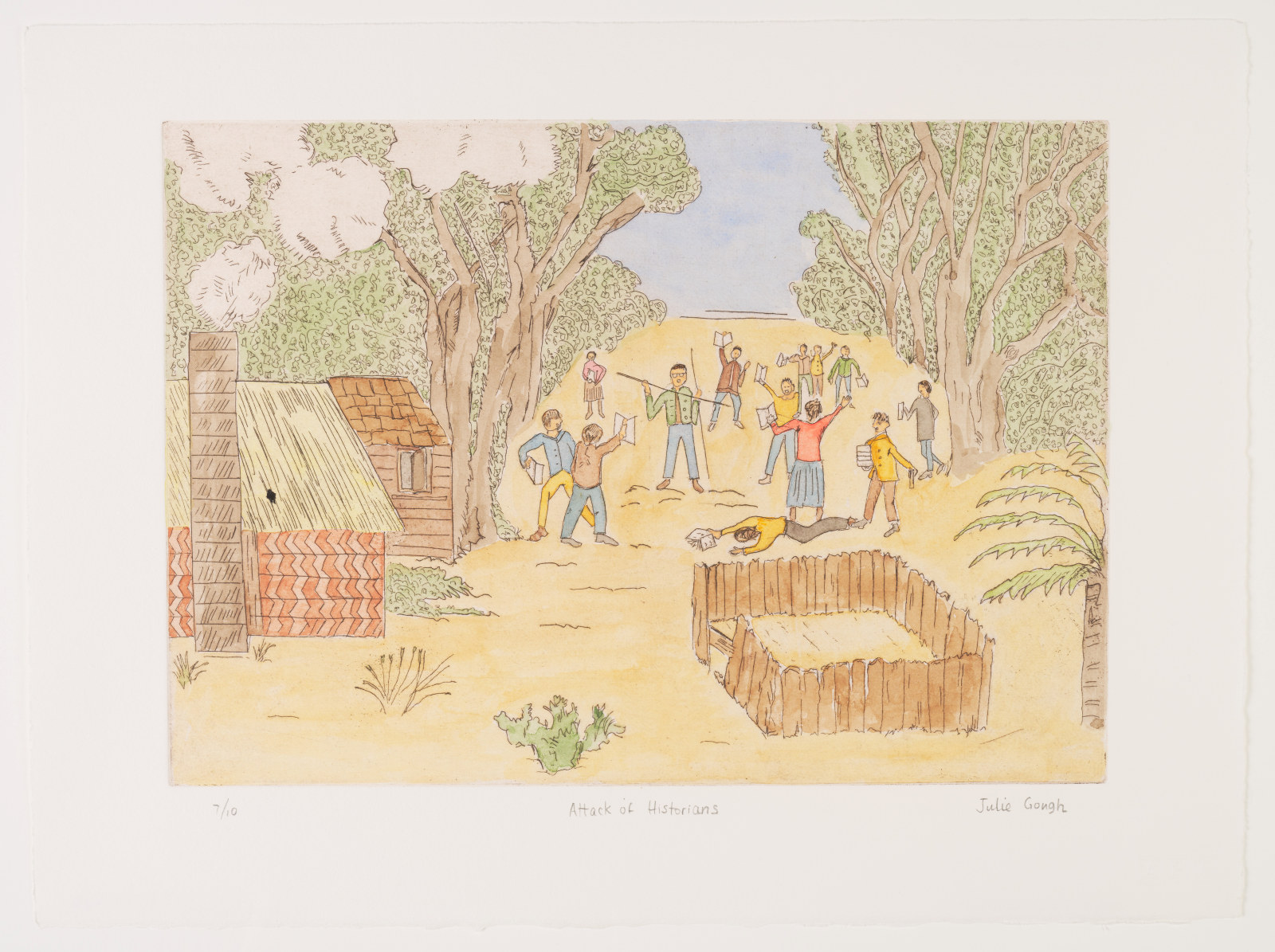
Married women teachers' applications, 1932–35
In 1932, against the backdrop of the Depression, the NSW Government passed the Married Women (Lecturers and Teachers) Act. This Act restricted the employment of married women in the Department of Public Instruction, which meant that currently employed married women faced dismissal and any woman intending to marry had to resign upon doing so.
However, married women teachers could apply for an exemption by completing a statutory declaration every year explaining their circumstances. Most applied on the grounds of hardship, combined incomes being inadequate to support a family, supporting husbands unemployed due to illness or injury (especially after service during World War I), or supporting family members.
We hold copies of 693 declarations for exemption submitted by married women teachers for the years 1932–1935 as part of series NRS–12294 Special bundles [Public Service Board], which have all now been digitised and are available to view in our State Archives catalogue.
Example from the records
Browse all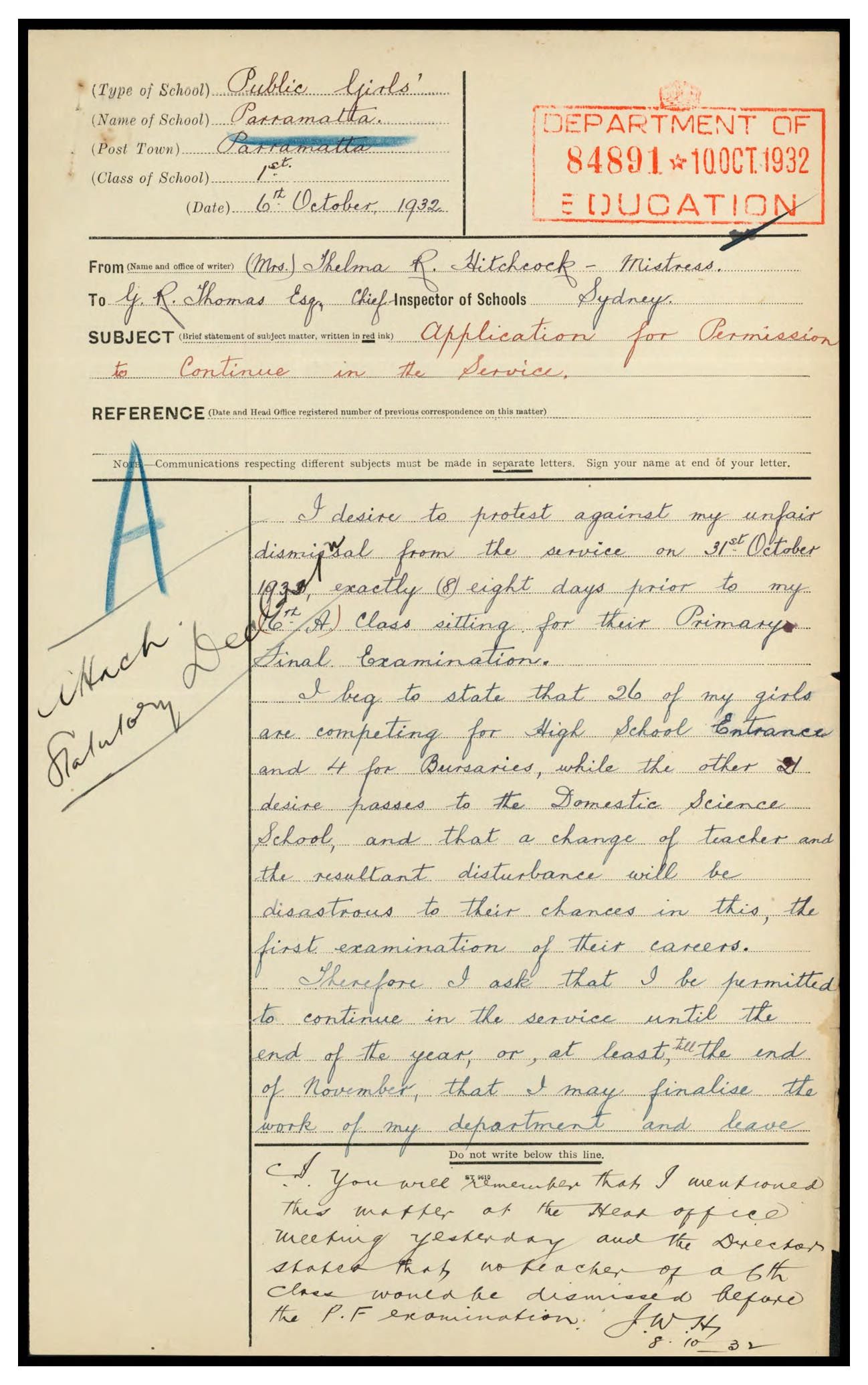
Related resources
School teachers guide
Records that relate to teacher employment in the Government sector between 1788 and 1979
Teachers' rolls & career cards
These are the points of entry for research about teachers. The cards tell us where and when teachers were employed, and their classification
Women's stories
Browse all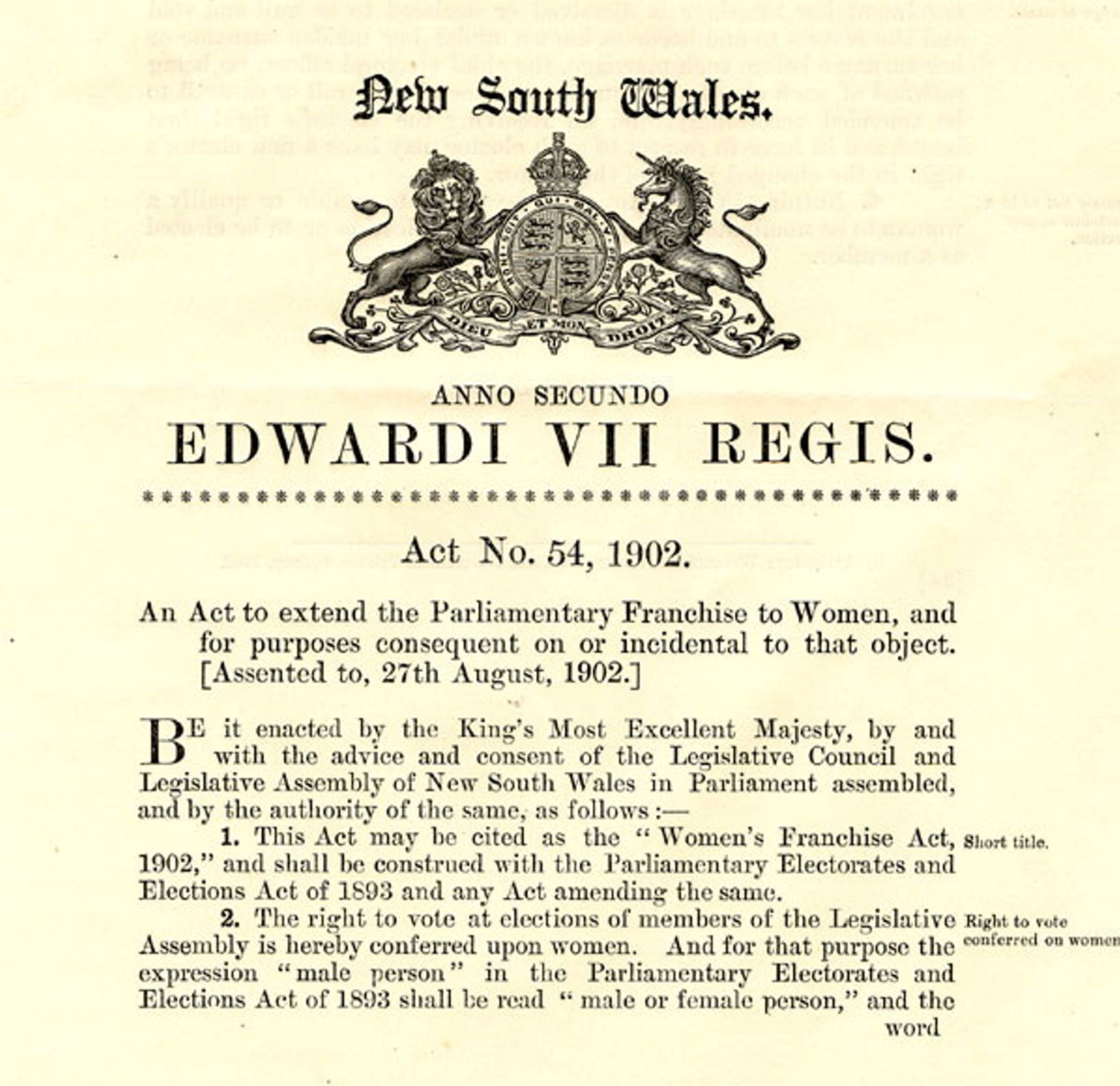
27 August 1902 - Women's Franchise Act (voting)
On 27 August 1902 the Women's Franchise Act gave women the right to vote in state elections in New South Wales.
Convict Sydney
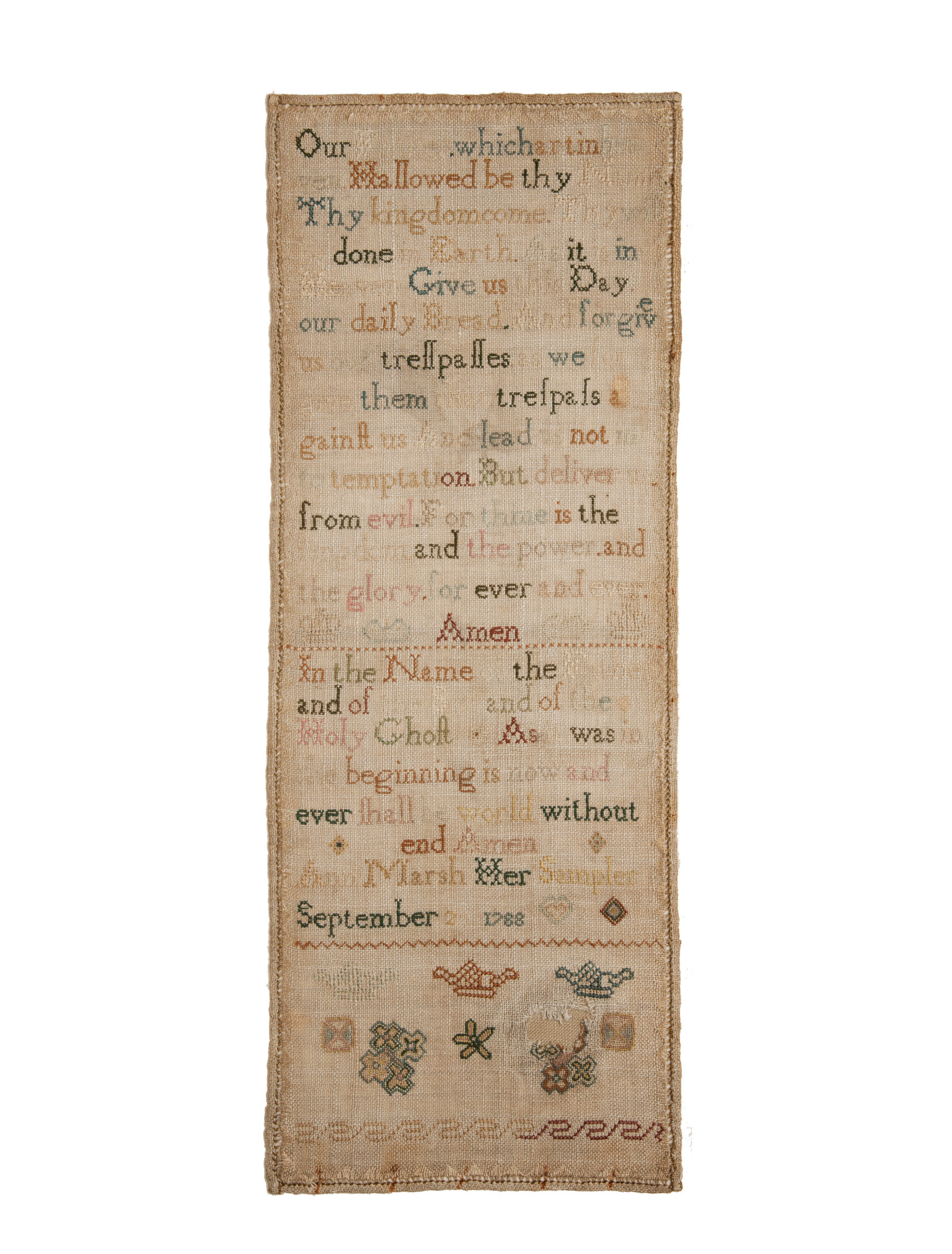
Sampler
In September 1788 a young woman named Ann Mash (or Ann Marsh) from Devon, England, embroidered the Lord’s Prayer to create this sampler